
Winter is one of the most demanding seasons for your roof. Snow accumulation, ice formation, freezing temperatures, and repeated weather fluctuations place constant stress on roofing systems and exterior components. As a homeowner, winter roof care is not just about preventing leaks—it’s essential for protecting your home’s structure, maintaining energy efficiency, and preserving long-term roof performance.
Unlike sudden storm damage, winter-related roof problems often develop gradually. Understanding how snow and ice impact roof health allows you to take proactive steps before minor concerns turn into costly repairs. This awareness is especially important in Maryland, where winters can bring heavy snowfall and prolonged cold temperatures.
At EC Roofing, we specialize in roofing and exterior services designed to perform in challenging seasonal conditions. Our experience with winter-related roofing concerns allows us to help homeowners identify vulnerabilities, reduce risk, and protect their roofs during the harshest months of the year. This guide explains how winter weather affects your roof and outlines practical ways to help keep your roof in good condition.
Snow Load and Structural Stress on Roofs
Snow load refers to the total weight of snow resting on the roof surface, and that weight increases significantly as snow becomes compacted or absorbs moisture. Wet snow is especially heavy and can place far more stress on your roof than fresh snowfall.
As snow load increases, pressure is transferred to rafters, trusses, and roof decking. Over time, this strain can cause subtle structural changes that weaken your roof’s ability to support additional weight. Roofs with low slopes or flat designs are particularly vulnerable because snow doesn’t naturally shed, allowing accumulation to persist longer.
You may notice early warning signs inside your home before any exterior damage becomes visible. Pay close attention to:
- New cracks forming along ceilings or upper walls
- Doors or windows that suddenly become difficult to open
- Unusual creaking or popping sounds during temperature changes
- Noticeable sagging or uneven rooflines
These signs suggest your roof may be under excessive load and should not be ignored.
Ice Dams and Their Impact on Roof Systems
Ice dams are one of the most common and destructive winter roofing problems that homeowners in Maryland face. They develop when heat escapes from your living space into the attic, warming the roof surface and melting snow. As the meltwater travels toward colder roof edges, it refreezes, forming a ridge of ice that blocks proper drainage.
Once an ice dam forms, melting snow has nowhere to go. Water becomes trapped behind the ice and is forced beneath shingles and roofing materials. This water intrusion can damage underlayment, insulation, ceilings, walls, and interior finishes. Because this damage occurs gradually, you may not realize there is a problem until you start noticing interior damage.
Common indicators that may suggest ice dam formation include:
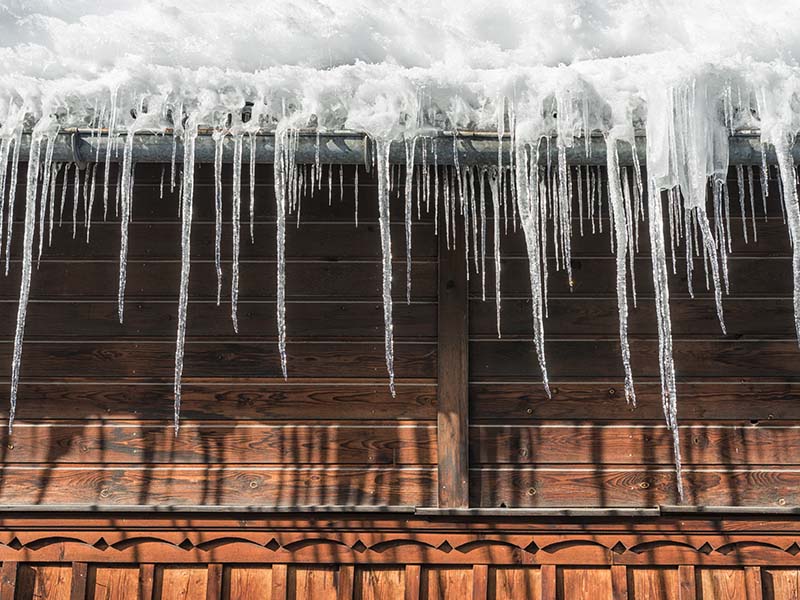
- Large icicles hanging from gutters or roof edges
- Uneven snow melting across different roof sections
- Water stains near exterior walls or ceiling edges
- Peeling paint or bubbling drywall indoors
These symptoms point to temperature inconsistencies and moisture intrusion rather than surface ice alone. Preventing ice dams requires addressing heat loss and roof temperature imbalances so water can drain properly instead of backing up into your roofing system.
Freeze-Thaw Cycles and Roofing Material Wear
Winter temperatures often fluctuate above and below freezing, creating freeze-thaw cycles that gradually weaken roofing materials. When moisture enters small cracks or seams and freezes, it expands. As temperatures rise and the ice melts, it leaves behind larger openings that allow more water to enter during the next cycle.
Over time, this repeated expansion and contraction accelerates material wear. Shingles may crack, curl, or lose protective granules, while sealants can become brittle and lose flexibility. Flashing around roof penetrations may loosen or separate, increasing your risk of leaks as winter progresses.
Certain areas of your roof are especially vulnerable to freeze-thaw damage, including:
- Asphalt shingles and sealant strips
- Flashing around chimneys, vents, and skylights
- Roof valleys where water naturally concentrates
- Roof edges exposed to repeated melting and refreezing
If left unaddressed, freeze-thaw damage can shorten your roof’s lifespan. Regular observation and timely repairs help you limit deterioration and maintain reliable roof performance throughout the winter season.
Gutters and Drainage During Winter Months
Your gutters and downspouts play a critical role in winter roof health by directing melting snow and ice away from your home. When these systems are clogged, damaged, or improperly pitched, water can back up onto the roof surface, increasing the risk of ice dams and moisture intrusion.
Debris left in gutters from fall can freeze, blocking water flow and adding excess weight. Ice buildup places strain on gutter fasteners and fascia boards, sometimes causing gutters to pull away from the roofline. Once drainage is compromised, melting snow looks for alternative paths—often beneath roofing materials or along exterior walls.
Poor winter drainage can lead to several secondary issues, including:
- Ice dam formation along roof edges
- Rotting fascia and soffit materials
- Moisture damage to siding and trim
- Water pooling near your foundation
These problems often extend beyond the roof itself and may not become noticeable until spring. Keeping gutters clear and functional before winter begins is one of the most effective ways you can reduce seasonal roofing risks.
Attic Insulation and Ventilation in Cold Weather
Attic insulation and ventilation are other important factors in how your roof performs during winter. Together, they regulate temperature and moisture levels within the attic, directly influencing snowmelt patterns and ice formation on the roof surface.
Insulation helps keep warm air inside your living space. When insulation is insufficient or uneven, heat escapes into the attic and warms the roof deck. This uneven heating causes snow to melt prematurely, increasing the likelihood of refreezing near the eaves.
Ventilation allows cold air to circulate through the attic, helping maintain consistent roof temperatures and prevent moisture buildup. Without proper airflow, warm, moist air can condense on attic surfaces, leading to frost accumulation, mold growth, and wood rot. Over time, these conditions weaken structural components and reduce roof lifespan.
Balanced insulation and ventilation create a stable attic environment that supports winter roof health.
Practical Winter Roof Care Tips for Homeowners
Effective winter roof care doesn’t require you to take unnecessary risks, and in fact, the last thing you should do is get up on your roof. Many preventative measures focus on observation, awareness, and maintaining surrounding systems rather than accessing the roof directly.
You can support winter roof health by:
- Monitoring rooflines after major snowstorms for uneven accumulation or sagging
- Checking attic spaces for signs of moisture, frost, or insulation gaps
- Keeping downspouts and drainage paths clear of snow buildup
- Avoiding attempts to remove snow or ice directly from the roof
Climbing onto icy roof surfaces can be dangerous and may damage roofing materials. Shingles can crack under pressure, and improper tools can dislodge flashing or create new vulnerabilities.
Knowing when to observe and when to seek professional assistance is a key part of responsible winter roof care.
Protecting Your Roof Through the Winter Season
Winter conditions can expose weaknesses in your roof that aren’t always visible at first glance. By understanding how snow and ice affect roofing systems, you’re better prepared to recognize when your roof needs attention and when professional insight is warranted. That awareness is what helps prevent seasonal stress from turning into long-term damage.
At EC Roofing, we bring a practical, experience-driven approach to roofing and exterior care, helping you understand the condition of your roof and what it needs to perform through winter and beyond. Our focus is on honest evaluations and solutions that align with your home’s specific needs.
If you have concerns about how your roof is handling winter weather, contact us today to schedule a professional evaluation and gain peace of mind knowing your roof is in capable hands.