
When you clean your gutters or check your downspouts after a heavy rain, you may notice small, sand-like particles collecting along the bottom. Those particles are asphalt shingle granules. While a small amount of granule loss is normal, a noticeable buildup in your gutter system can signal underlying roofing issues that shouldn’t be ignored.
If you’re unsure whether what you’re seeing is routine wear or a warning sign, professional guidance provides clarity. EC Roofing regularly works with asphalt roofing systems, and we’re here to ensure you understand your roof and are empowered to make informed decisions that keep your home protected. In this guide, we explain what causes granule loss, how to recognize serious roofing problems, and when to consider repair or replacement.
What Are Shingle Granules and Why Do They Matter?
Each asphalt shingle on your roof is coated with crushed stone granules embedded into a layer of asphalt. These granules protect the asphalt from ultraviolet radiation, which can dry out and crack shingles over time. Without that protective barrier, the asphalt would deteriorate much faster, significantly shortening your roof’s lifespan.
Granules also enhance fire resistance and provide impact protection against hail and airborne debris. Additionally, they contribute to your roof’s color consistency and curb appeal. Some modern shingles use reflective granules to improve energy efficiency by reducing heat absorption.
As your roof ages, weather exposure gradually loosens these granules. Rainwater carries them into your gutters, where they accumulate. A light scattering is expected throughout your roof’s lifespan. However, once granule loss becomes excessive, this indicates that the shingles are beginning to lose their protective coating.
When the underlying asphalt becomes exposed, your roof becomes more vulnerable to cracking, moisture penetration, and accelerated aging. Recognizing the importance of granules helps you understand why finding large amounts in your gutter system deserves attention.
Is Shingle Granule Loss Ever Normal?
You should know that some granule loss is completely normal. In fact, new roofs often shed excess granules during the first few rainstorms after installation. These loose particles are typically residual manufacturing granules and do not indicate damage.
Over time, gradual granule wear also occurs as part of the natural aging process. Sun exposure, seasonal temperature changes, rain, and wind slowly wear down the surface. During routine gutter cleaning, you may notice a thin layer of granules—this alone is not cause for concern.
The difference lies in volume, location, and timing. Understanding that distinction helps you determine whether your roof is aging naturally or showing signs of deterioration.
Signs Granule Loss Is Likely Normal
- Your roof was installed recently
- Granules appear lightly scattered, not heavily concentrated
- No visible bald spots on shingles
- No signs of leaks or interior damage
- Granule loss remains consistent but minimal over time
If these conditions apply, your roof is likely performing as expected.
However, granule loss becomes concerning when it shifts from gradual wear to sudden or widespread deterioration.
Signs Granule Loss Is NOT Normal
- Large amounts of granules collecting after a single storm
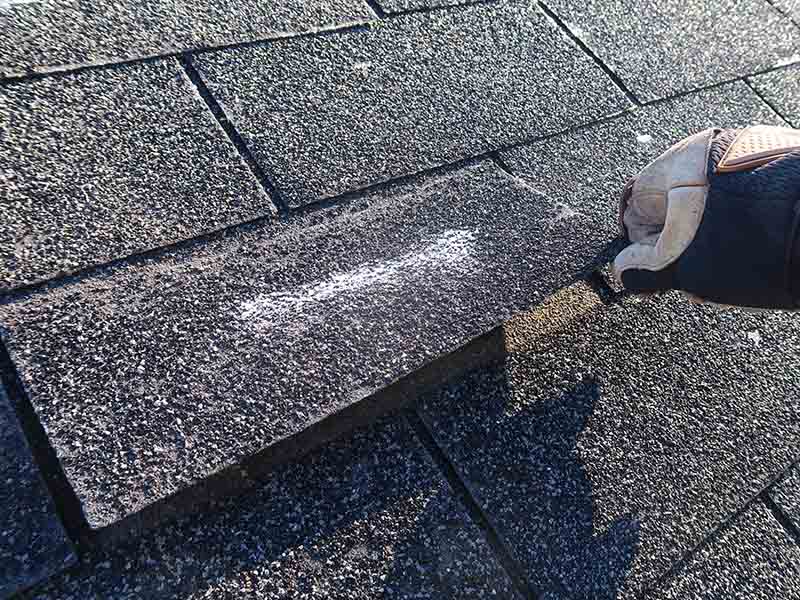
- Noticeable bald patches exposing dark asphalt
- Uneven discoloration across multiple roof sections
- Granules accumulating heavily at downspout exits
- Shingles that appear cracked, brittle, curling, or loose
- Interior signs of water intrusion, such as ceiling stains
Recognizing abnormal granule loss early allows you to act before leaks or structural damage develop. Instead of waiting for visible water damage, scheduling a professional inspection ensures you fully understand your roof’s condition and available options.
Common Causes of Excessive Shingle Granules in Gutters
When you see significant granule accumulation in your gutter system, it usually connects to a larger roofing issue. Identifying the cause helps determine the right solution.
Severe weather is one of the most common contributors. Hail can dislodge granules on impact, leaving pitted areas across shingles. Strong winds may lift and flex shingles, loosening surface granules. Even heavy, wind-driven rain can accelerate deterioration if shingles are already aging.
Roof age also plays a major role. Most asphalt shingles last between 20 and 30 years. As your roof approaches the end of its service life, granule loss typically increases.
The Most Common Causes of Excessive Granule Loss
- Hail impact damage
- High winds and storm activity
- Advanced roof age
- Poor attic ventilation causing heat buildup
- Improper installation or low-quality materials
- Frequent foot traffic during maintenance
Poor attic ventilation deserves special attention. When trapped heat builds beneath your roof deck, it can prematurely age shingles from below, weakening the bond between asphalt and granules.
Warning Signs Your Roof May Be Failing
Granules in your gutters are often an early warning sign, but they rarely appear alone. When combined with other symptoms, they may indicate that your roof is approaching failure.
Start with a visual assessment from the ground. Look for irregular shading or patches that appear darker than the surrounding shingles. These areas may indicate exposed asphalt.
Common Signs of Roof Deterioration
- Curling or buckling shingles
- Cracked or missing shingles
- Bald spots where granules are missing
- Excessive granules collecting at downspouts
- Water stains on ceilings or walls
- Mold or mildew in the attic
- Rising energy bills due to reduced insulation performance
Interior warning signs are especially concerning. Water intrusion can damage drywall, insulation, and structural components. If you notice ceiling discoloration or peeling paint near the roofline, your roof may already be compromised.
The earlier you address these warning signs, the more cost-effective your solution is likely to be. Ignoring them increases the risk of extensive structural damage.
How Your Gutter System Affects Roof Health
Your roof and gutter system work together to protect your home from moisture damage. When gutters become clogged with granules and debris, water can’t drain properly.
As water backs up along the roof edge, it can seep beneath shingles and underlayment. This trapped moisture accelerates deterioration and may cause rot along fascia boards and roof decking. Over time, persistent moisture exposure weakens structural components.
During the colder months, clogged gutters increase the likelihood of ice dams. As melting snow refreezes at the roof edge, it forces water beneath shingles, worsening granule loss and increasing leak risk.
Routine maintenance significantly reduces these issues. Cleaning gutters at least twice per year improves drainage and prevents backup. Installing gutter guards may further minimize debris buildup.
By maintaining your gutter system, you reduce unnecessary strain on your roofing materials. Viewing both systems as interconnected ensures long-term protection and reduces premature roof replacement costs.
Should You Repair or Replace Your Roof?
When granule loss becomes noticeable, it’s natural to question whether a simple repair will resolve the issue or if a full roof replacement is necessary. Ultimately, the right solution depends on the overall scope and severity of the damage.
When a Roof Repair Is Enough
In cases where the damage is limited to a specific area, such as a section affected by hail, a targeted repair can often restore your roof’s performance. By replacing a small number of compromised shingles, you can prevent leaks, reinforce protection, and extend the overall lifespan of your roof without the need for more extensive work.
When Roof Replacement Is the Smarter Investment
However, when granule loss is widespread across multiple roof planes, a full replacement may be the more practical long-term investment. Extensive bald spots, cracking, and curling shingles are strong indicators of advanced aging. At this stage, continued patchwork repairs may only postpone the inevitable while gradually increasing cumulative repair costs.
Because every roof ages differently, a professional roof inspection is the most reliable way to determine the best course of action. A thorough evaluation of shingle condition, flashing integrity, ventilation performance, and structural soundness provides the clarity needed to make a confident decision.
By choosing the right solution at the right time, you not only protect your home’s structural integrity but also preserve its long-term value.
Protect Your Home with Experienced Roofing Professionals
Shingle granules in your gutter system are more than a maintenance detail; they’re one of the earliest indicators of how your roof is aging and responding to weather exposure. Paying attention to these subtle signs allows you to address wear proactively rather than waiting for more disruptive problems to develop. In many cases, early evaluation leads to simpler solutions and more strategic long-term planning.
An experienced roofing contractor can determine whether the granule loss you’re seeing reflects normal aging, storm-related damage, or a roofing system nearing the end of its service life. Accurate diagnosis is essential to ensuring the recommended solution addresses the root cause of the issue. EC Roofing brings the expertise and experience necessary to properly assess shingle granule loss and deliver clear, targeted recommendations.
If you’ve noticed granules accumulating in your gutters, now is the time to act. Contact EC Roofing to schedule a professional roof assessment and receive straightforward guidance designed to protect your home and your investment.