
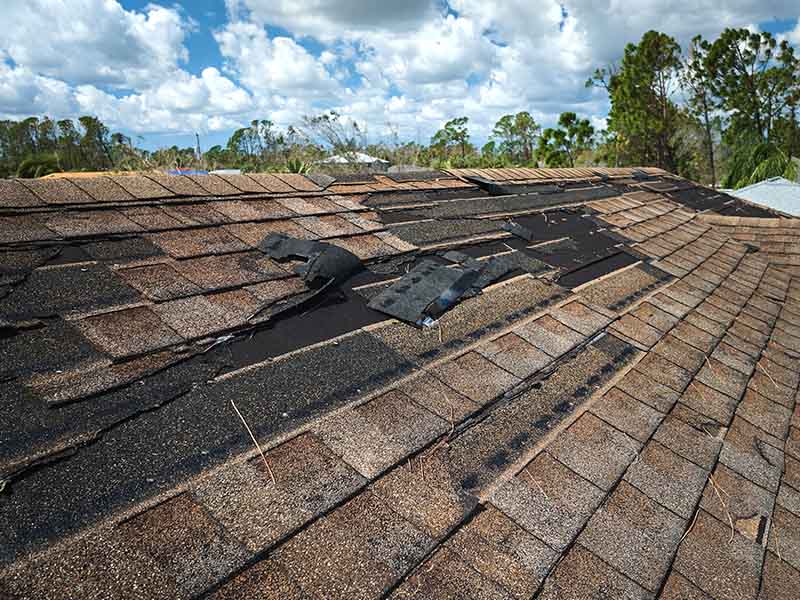
After a strong storm, your roof may look completely normal from the ground. Wind damage, however, can be subtle. Shingles may lift and settle back into place, flashing can loosen, and small openings may form without causing an immediate leak.
Knowing what to look for helps you act before hidden damage affects your attic, insulation, ceilings, or walls. These common warning signs can help you decide when your roof needs a closer inspection.
Missing, Lifted, and Creased Shingles
Missing shingles are among the clearest signs of wind damage on a roof. You may notice a dark, uneven area where roofing material has blown away, or you may find shingles and fragments in your yard, driveway, or gutters.
When a shingle is missing, the underlayment and roof deck become more vulnerable to rain, sunlight, and temperature changes. Even if your home isn’t leaking yet, the exposed area may allow water to enter during the next storm.
Shingles don’t have to blow away completely to sustain damage. Strong gusts can lift a shingle, break the adhesive seal underneath it, and then allow it to settle back into place once the wind stops. Because the shingle may still look flat, this type of roof wind damage can be difficult to see from the ground.
Use binoculars or your phone’s zoom feature to look for:
- Missing shingles or exposed roofing layers
- Raised or uneven shingle edges
- Horizontal creases across shingle tabs
- Curled corners or cracked surfaces
- Rows that no longer lie flat
Pay close attention to roof edges, corners, ridges, and dormers, where wind pressure is often strongest. Don’t climb onto the roof after a storm, since loose materials and wet surfaces may create unsafe conditions.
Granule Loss and Exposed Asphalt
Asphalt shingles are coated with mineral granules that protect them from sunlight, moisture, and daily weather exposure. Some granule loss is normal over time, but high winds and airborne debris can cause sudden or uneven wear.
You may notice dark, smooth, or discolored patches where granules have been scraped away. You can also check your gutters and downspouts for coarse, sand-like material. A small amount isn’t always concerning, but large accumulations after a storm may point to roof damage.
Once granules are lost, the asphalt beneath them becomes more exposed to ultraviolet light. That exposure can cause shingles to dry out, become brittle, and deteriorate faster.
Granule loss can also result from hail, aging, foot traffic, or installation issues. Because appearance alone doesn’t confirm the cause, a professional inspection may be needed to determine whether the damage is wind-related.
Damaged Flashing, Ridge Caps, and Roof Edges
Wind can damage more than shingles. It can also loosen flashing, shift ridge caps, and pull roofing materials away from the edges of your roof.
Flashing protects the joints around chimneys, skylights, valleys, walls, and roof penetrations. When it bends or separates from the surrounding surface, water can enter through gaps that may be difficult to see from the ground.
Look for metal that appears raised, warped, or pulled away from brick, siding, or nearby shingles. Cracked sealant and newly visible gaps can also indicate that flashing has shifted during a storm.
Ridge caps cover the peak where two roof slopes meet. Because this area receives direct wind exposure, ridge cap shingles can lift, crack, or blow away.
Roof edges are especially vulnerable because wind can get underneath loose materials and create upward pressure. Once that happens, nearby shingles and metal components may begin to separate from the roof deck.
From the ground, check for bent drip edges, loose gutters, hanging trim, or sections of fascia that no longer look aligned. Damage along the roof perimeter can worsen during later storms, so even a small change is worth having inspected.
Interior Signs of Wind Damage
Sometimes the first warning signs of roof wind damage appear inside your home. A lifted shingle, damaged underlayment, or loose piece of flashing can create an opening that isn’t visible from outside.
Once water enters, it may travel along the roof deck, rafters, pipes, or insulation before appearing on a ceiling or wall. As a result, the stain you see indoors may be several feet away from the actual entry point.
Check upper-level ceilings and exterior walls after heavy rain. New yellow, brown, or gray stains may indicate moisture moving through the roofing system.
Other interior warning signs include:
- Bubbling or peeling paint
- Loose drywall tape
- Soft or damp drywall
- Musty odors in upper rooms
- Wet or compressed attic insulation
- Dark marks on rafters or roof decking
- Rattling or flapping sounds during windy weather
If you can safely enter the attic, use a flashlight to inspect the underside of the roof deck. Look for moisture, darkened wood, water trails, or daylight coming through gaps.
Don’t assume the issue is minor because the stain is small. Water may already have affected insulation, wood framing, or hidden areas above the ceiling.
Avoid touching wet electrical fixtures or entering an area with a sagging ceiling. If moisture is near wiring, outlets, or lights, stay clear and contact qualified professionals.
Wind Damage Versus Hail Damage and Normal Aging
Wind damage, hail damage, and normal roof aging can create similar symptoms. Looking at the overall pattern can help you understand what may have happened, although a professional inspection is still the best way to confirm the cause.
Wind damage often appears as lifted edges, missing shingles, horizontal creases, broken adhesive seals, or loose ridge caps. It may be concentrated along roof edges, corners, ridges, and areas where wind pressure changes direction.
The pattern may also be uneven. One slope could have several damaged shingles while another appears mostly unaffected, depending on wind direction, roof shape, nearby trees, and surrounding buildings.
Hail damage usually creates impact-related marks. Asphalt shingles may show round or irregular areas of missing granules, while metal vents, flashing, and gutters may have visible dents.
Normal aging tends to affect the roof more evenly. Older shingles may fade, curl, crack, shed granules, or become brittle across several areas instead of showing a sudden, isolated pattern.
A quick comparison can help you recognize the differences:
- Wind damage: Lifted, creased, torn, or missing shingles
- Hail damage: Impact marks, dents, or concentrated granule loss
- Normal aging: Widespread fading, curling, cracking, or brittleness
A single storm may cause both wind and hail damage. Take dated photos of visible changes, fallen materials, and damaged exterior components, so you have a clear record of the roof’s condition.
What to Do After a High-Wind Storm
Your safety should be the first priority after a severe storm. Stay away from fallen power lines, unstable trees, hanging branches, and loose exterior materials.
You shouldn’t climb onto the roof, even if it looks dry. Wind may have loosened shingles, flashing, gutters, or sections of decking, and debris can make the surface more hazardous.
Once conditions are safe, walk around your home and inspect the property from the ground. Take clear photos of each visible roof slope, along with damaged siding, gutters, trim, or nearby structures.
A basic post-storm check should include these steps:
- Look for missing, lifted, or uneven shingles.
- Check the yard for roofing fragments.
- Inspect gutters, fascia, soffits, and siding.
- Look for stains on ceilings and upper walls.
- Check the attic for damp insulation or wood.
- Record the storm date and visible conditions.
- Arrange an inspection if you notice damage.
If water is entering your home, move furniture, electronics, and valuables away from the affected area when it’s safe. Place a container beneath an active drip to limit interior damage.
Don’t attempt to secure shingles or install a tarp without proper equipment, training, and fall protection. Improvised repairs can damage the roof further and put you at risk of injury.
Keep your photos, inspection reports, receipts, and repair recommendations together. Organized documentation can be helpful if you later need to contact your insurance provider.
When Roof Repair May Be Enough
Wind damage doesn’t automatically mean you need a full roof replacement. A targeted repair may be appropriate when the affected area is small, and the surrounding roofing materials remain in good condition.
Repairs may involve replacing missing shingles, securing loose materials, restoring damaged ridge caps, repairing flashing, or sealing vulnerable penetrations. The right solution depends on where the damage occurred and whether nearby components were also affected.
Your roof’s age and condition matter as well. Newer shingles are generally more flexible and may tolerate localized work better than older, brittle materials.
A professional should inspect more than the most visible damaged shingle. Nearby fasteners, adhesive seals, roof edges, vents, flashing, underlayment, and decking may also need evaluation.
You should receive a clear explanation of what was found and how the proposed repair addresses the source of the problem. Replacing one missing shingle may not be enough if several surrounding seals have failed.
Material availability can also affect the repair. If the original shingle has been discontinued, a replacement may differ in size, profile, or color.
Color variation alone doesn’t always prevent a repair, but the new material must still be compatible with the existing roofing system. When the damage is limited and the rest of the roof remains sound, professional roof repair can be an effective and practical solution.
When Roof Replacement Makes More Sense
A full roof replacement may be more practical when wind damage is widespread or the existing roofing system already has significant wear.
Replacement becomes more likely when several slopes contain missing, creased, cracked, or unsealed shingles. It may also be recommended when repairs would require disturbing brittle materials across a large area.
Older shingles can crack when they’re lifted during repair work. In that situation, attempting to replace a small section may damage the surrounding shingles.
Repeated leaks, deteriorated decking, extensive granule loss, and widespread adhesive failure may also support a replacement recommendation. Previous repairs that no longer perform reliably should be considered as well.
Several conditions may point toward replacement:
- Damage across multiple roof slopes
- Widespread broken shingle seals
- Brittle or cracking roofing materials
- Repeated leaks in different locations
- Extensive granule loss
- Damaged or deteriorated decking
- Discontinued or incompatible shingles
A roofing contractor should evaluate the roof as a complete system. That assessment should include the shingles, flashing, underlayment, ventilation, drainage, decking, and roof penetrations.
The recommendation should explain why repair is or isn’t practical. You should understand the extent of the damage, the condition of the existing roof, and the expected performance of each option.
You shouldn’t feel pressured into replacement after a brief visual check. A major roofing decision should be based on documented conditions and a thorough inspection.
Why a Professional Roof Inspection Matters
Some signs of wind damage are easy to see, but others remain hidden beneath shingles, flashing, or roof edges. A shingle may look flat even after its adhesive seal has failed, and a small gap can allow water to enter during future storms.
A professional roof inspection can identify problems around ridges, valleys, vents, flashing, gutters, and roof penetrations. It can also help separate recent storm damage from normal aging or installation issues.
You should receive clear findings, photos, and an explanation of any recommended repairs. A thorough inspection may also uncover related damage to siding, fascia, soffits, gutters, or exterior trim.
If you’ve noticed missing shingles, unusual roof noises, interior stains, or storm debris around your home, scheduling an inspection can help you address problems before they worsen.
Protect Your Roof Before Wind Damage Gets Worse
Wind damage may appear as missing shingles, lifted edges, creases, granule loss, loose flashing, damaged ridge caps, or indoor moisture. It can also remain hidden until another storm turns a small opening into a serious leak.
Our team at EC Roofing provides roof repair, roof replacement, storm damage, gutter, siding, and exterior services. We’ll inspect your roofing system, explain the findings clearly, and recommend the most appropriate next step.
Contact EC Roofing to schedule a professional roof consultation and protect your home before hidden wind damage leads to more extensive repairs.